
History & fortifications

Construction of the Walls of Cartagena: stages and layout

The enclosure was not created in one campaign. Its present form reflects successive military, maritime and urban decisions as Cartagena grew into a colonial port.

Updated: 30 October 2026

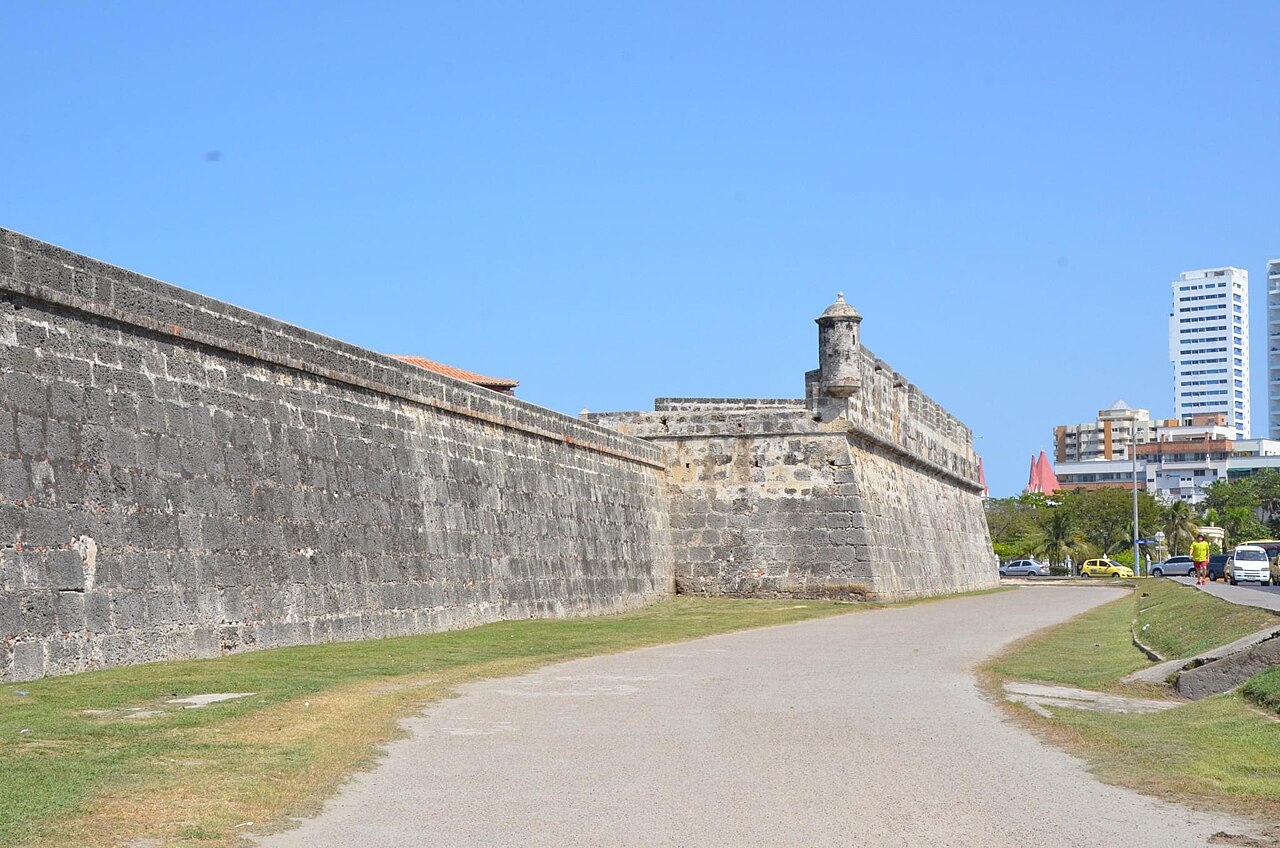
Balu arte y muralla de Cartagena
Joe Ross · 2016 · CC BY-SA 2.0

Defence built in stages

UNESCO places Spanish defences in 1586 and describes their extension in the 18th century. This history concerns a system of walls, forts and bay defences, rather than one construction project.

From wall to city

In the San Diego stretch, stonework, sentry boxes and the urban plan show how defence became interwoven with daily life. The enclosure does not enclose an isolated monument, but connects viewpoints, neighbourhoods and the sea.

How to read it today

  • Notice the thickness of the stone and the sentry boxes as watch posts.
  • Read the layout as a frontier between the city and the bay.
  • Relate each bastion to its defensive function, not just as a photo backdrop.

Frequently asked questions

Frequently asked questions

When were Cartagena’s walls built?

UNESCO places Spanish defences in 1586 and their extension in the 18th century. It was a staged process, not a single work.

Why did it take so long?

Because it answered successive military, maritime and urban decisions as the city grew as a colonial port.

What material are they made of?

Local coral stone, worked to resist the Caribbean climate and artillery fire.

Are the walls and the Castle the same?

No. San Felipe Castle is a separate fortress; the walls are the urban enclosure of the defensive system.

Who built them?

They were built by the Spanish Crown with local labour, within the Caribbean defensive system.

Sources

Sources and verification

This guide gathers information from public sources and is not an official website. Verify accesses and services on your visit day.